Furnished Apartments Zurich | Rent a Flat in Zurich
- 27 Search results
Tips for Finding an Apartment in Zurich
Zurich is consistently ranked among the most expensive cities in the world to live in, and it has one of Europe's tightest rental markets. Vacancy rates in the city have sat well below one percent for years. Unfurnished apartments routinely draw dozens of applications, and landlords might ask for a Swiss employment contract, a debt-collection extract and three months' deposit before they will consider you.
That is the context in which furnished mid-term rentals make sense here. If you are arriving for a contract at a bank, at ETH or at one of the pharma and tech employers in the region, a furnished apartment gives you an address from day one, which you need in order to register, which you need in order to open a bank account. Zurich rewards arriving with the first domino already tipped.
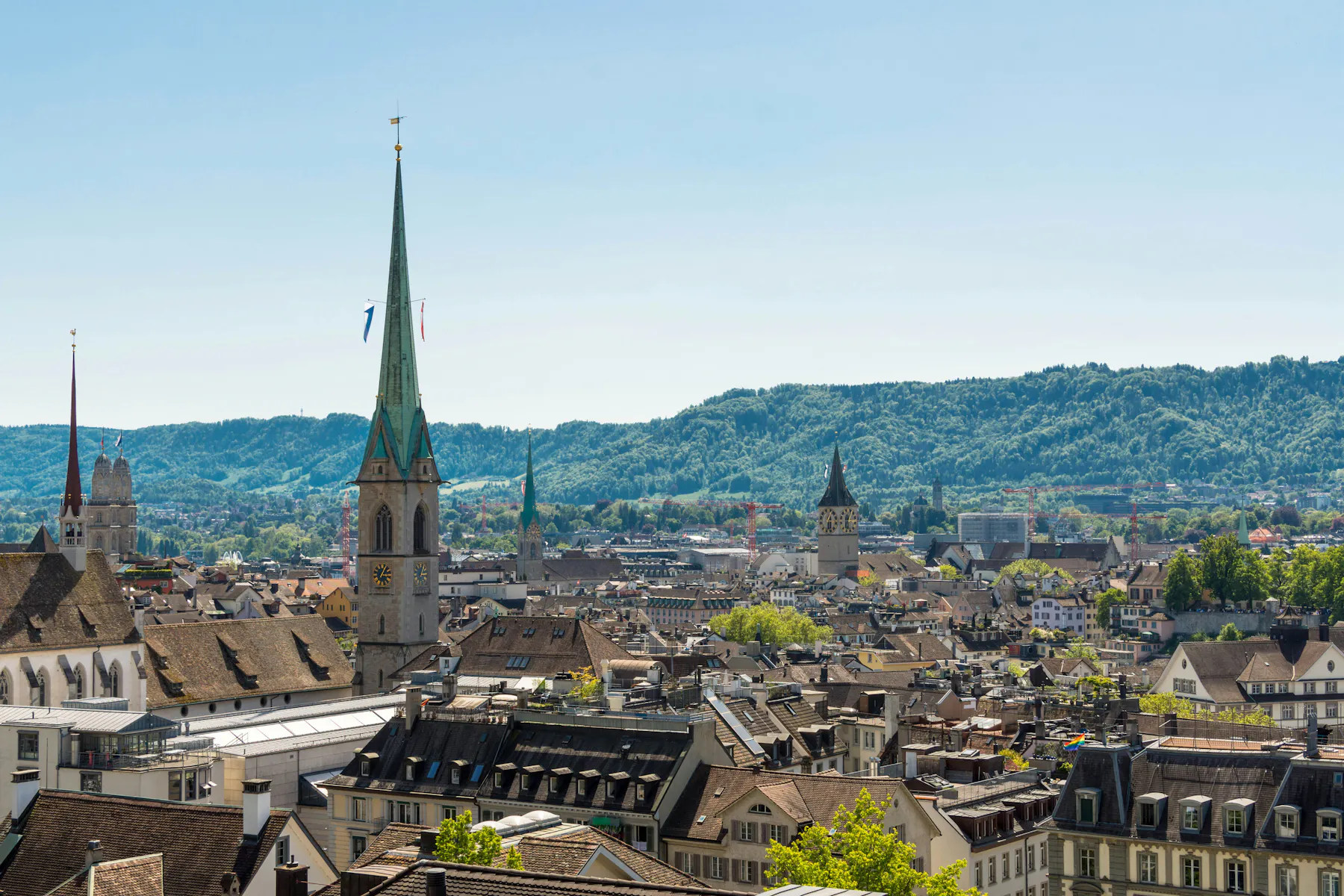
The city is organized into twelve districts, called Kreise, numbered in a rough spiral from the old town outwards. Locals use the numbers. Learn them and the city gets much easier to navigate. Kreis 1 is the Altstadt: beautiful, central and almost never available to rent, so most searches start one ring out.
Living in Zurich Kreis 11 (Oerlikon and Seebach)
North of the center, Oerlikon is Zurich's second business hub. Once industrial, it now holds offices, the Hallenstadion arena, a growing residential quarter and a mainline station with direct trains to the airport in under ten minutes.
The Kreis 11 Neighborhood
This is where Wunderflats has the deepest supply in Zurich, and it is the practical choice for people who need space and transport over old-town charm. Oerlikon station puts you in Zurich Hauptbahnhof in about seven minutes and at the airport in about eight. If you are commuting to the north of the city or flying often, nothing else comes close.
The area is functional rather than picturesque. In exchange you get newer buildings, better layouts, and more apartment for your money than anywhere closer in.
What Drives the Price in Kreis 11
Building age and distance from Oerlikon station do most of the work here. Much of the stock is recent, and a newer furnished apartment with an elevator, a balcony and in-building laundry sits at the top of the local range. This is also where serviced apartments cluster, so check what the rent actually includes. Utilities, cleaning and internet are sometimes bundled and sometimes not, and that changes the comparison more than the headline figure does.
Living in Zurich Kreis 6 (Unterstrass and Oberstrass)
The slope running north from the center up toward the Zürichberg. ETH Zurich's main and Hönggerberg campuses, the University of Zurich and the university hospital all sit at or near its southern edge.
The Kreis 6 Neighborhood
The academic district, and the obvious first search for anyone arriving as a researcher, doctoral student or visiting fellow. You can walk down to ETH in fifteen minutes and up to the Zürichberg forest in twenty. Trams 9, 10 and 14 run through it.
It is residential and calm, with a quiet, well-kept feel and enough cafés and bakeries to support a student population. The higher up the hill you live, the better the view and the steeper the walk home.
What Drives the Price in Kreis 6
Two things move the price: how far up the hill you are, and how close you are to ETH or the university. Height buys a view and costs accordingly, and any apartment within walking distance of a campus carries a premium because the demand for it never really stops. Period buildings with original detail price above the post-war blocks beside them.
Living in Zurich Kreis 4 and Kreis 5 (Langstrasse and Zürich West)
Kreis 4 is Langstrasse, the city's densest and most multicultural strip, historically its red-light district and now equally its nightlife and restaurant quarter. Kreis 5 next door is Zürich West, a former industrial zone rebuilt around the Prime Tower, the Viadukt arches and the Schiffbau theater.
The Kreis 4 and Kreis 5 Neighborhood
The most interesting part of Zurich to live in, and the least Swiss-postcard. It suits younger professionals and creative-sector arrivals who want the city to have some friction to it. Bars, clubs, independent restaurants and the Frau Gerolds Garten market are all here, and Hardbrücke station connects you to the rest of the network.
Two honest caveats. Langstrasse is loud at night, and it is one of the few areas of Zurich where street-level activity might give a new arrival pause. Most people adjust quickly, but view the specific street before you commit if you can.
What Drives the Price in Kreis 4 and Kreis 5
Noise exposure is the single biggest variable. An apartment on a quiet side street costs meaningfully more than one facing Langstrasse itself, and anyone staying six months or longer tends to pay that difference willingly. Over in Kreis 5, converted industrial lofts and the newer buildings around the Prime Tower sit well above the older stock a few streets away.
Living in Zurich Kreis 3 (Wiedikon)
South-west of the center, on the lower slopes of the Uetliberg. Wiedikon is where a lot of Zurich actually lives: family apartments, corner shops, neighborhood bakeries, and quick access to both the lake and the mountain.
The Kreis 3 Neighborhood
The best balance on this list for people staying six months or longer. It is genuinely residential without being remote, tram and S-Bahn links to the center take around ten minutes, and the Uetliberg trailhead is at the end of the line for weekend walking.
Idaplatz is the neighborhood's center of gravity: a small square ringed by cafés that gives Wiedikon more of a village feel than its size suggests.
What Drives the Price in Kreis 3
Distance from the tram, and how far up the Uetliberg slope you are. Wiedikon rises steadily, and the higher, quieter streets cost more than the flatter ground near the tracks. Renovation matters as much as location here: the district's older apartments have been modernized very unevenly, so two addresses on the same street can be entirely different propositions.
Rent Prices in Zurich
The sections above cover what moves the price inside each district. For actual figures we publish at city level rather than per Kreis, because Zurich supply on Wunderflats is concentrated among a small number of professional operators. Per-district numbers would swing on a single landlord's pricing decision, and that is not a useful signal for anyone planning a move.
Across online furnished listings in Zurich as of August 2026, a studio or one-room apartment typically runs between CHF 2,100 and CHF 3,650 per month, with a midpoint around CHF 2,850. Two-room apartments sit between CHF 3,100 and CHF 4,450, midpoint about CHF 3,700. From three rooms upwards, expect CHF 4,800 to CHF 6,150, with a midpoint near CHF 5,450.
Each range covers the middle half of listings, so a quarter sit below it and a quarter above. Furnished mid-term rents in Zurich carry a premium over unfurnished long-term leases, because they include furniture, utilities and flexibility that a five-year Swiss lease does not.
Living in Zurich
Zurich is small, efficient and organized, and it expects the same from you. Deadlines are real and procedures are followed. The upside is that once you are set up, very little goes wrong.
Transport in Zurich
Public Transport
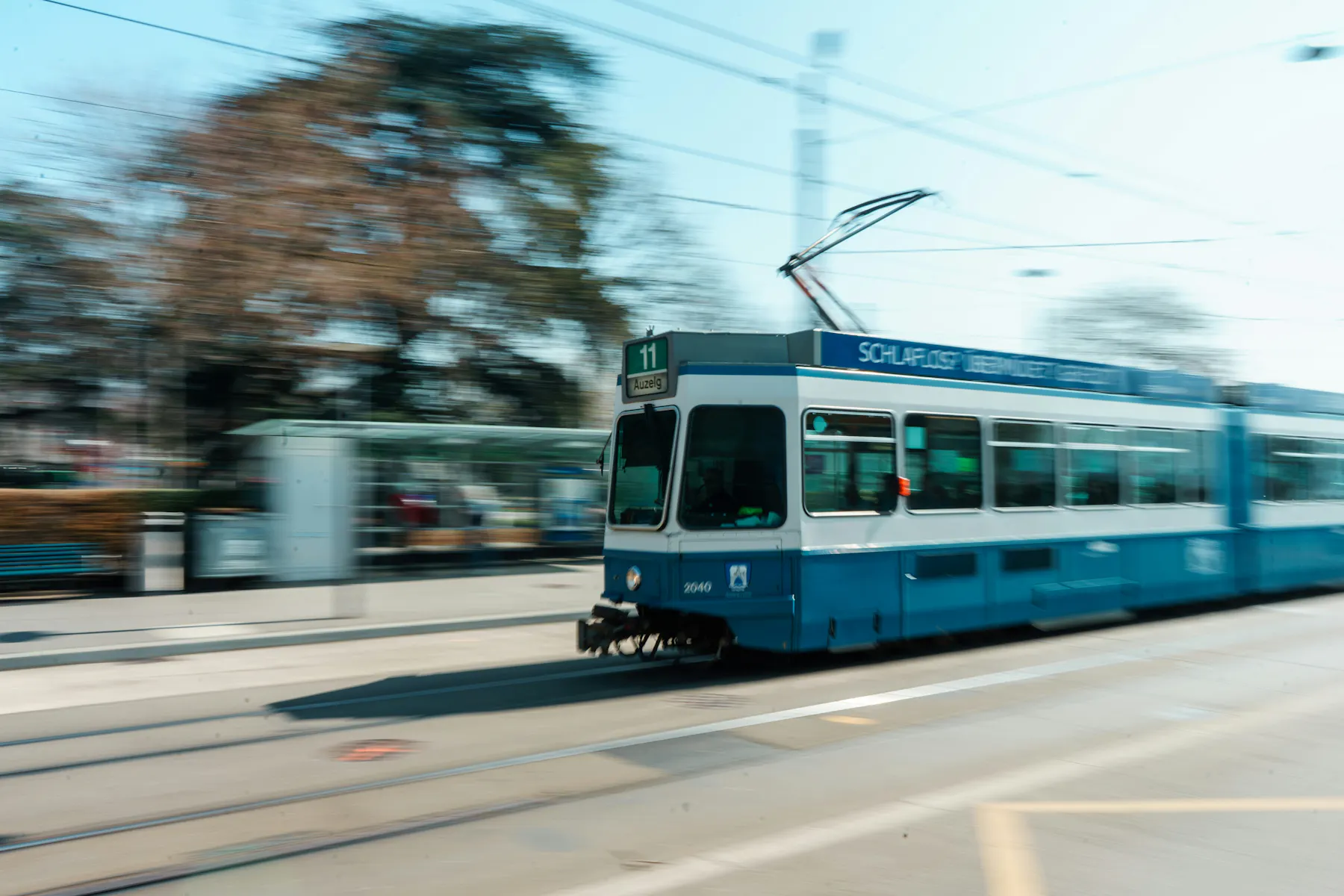
The ZVV network combines trams, buses, S-Bahn trains and the lake boats under one ticket, and it is among the best-run systems in Europe. Trams come every six or seven minutes on core routes.
One quirk to learn on day one: the city of Zurich is fare zone 110, and zone 110 counts as two zones. So a trip anywhere inside the city needs a 1 to 2 zone ticket, not a 1 zone ticket. That ticket costs CHF 4.70 in second class and is valid for one hour. A short-distance ticket is CHF 2.80 for 30 minutes, and a 24-hour ticket for the city is CHF 9.40.
If you are staying a month or more, the monthly NetworkPass for zones 1 to 2 is CHF 88.00 in second class, and it pays for itself at roughly three or four trips a week. The annual version is CHF 813.00. Under-25s pay CHF 64.00 monthly.
Taxis
Zurich taxis are expensive, and one thing has changed that catches people out. The city used to cap fares by ordinance. Since January 2024 the cantonal passenger transport rules replaced that regime and there is no longer a maximum tariff, so operators set their own prices. Base fares in the range of CHF 8 to CHF 15 and per-kilometer rates from around CHF 5 are common, and they vary by company.
Two habits protect you. Prices must be displayed on the outside of the vehicle, so read them before you get in. And the meter must be running for the whole trip. Tipping is not expected in Switzerland.
In practice, most residents use public transport. The tram network is fast enough that a taxi rarely saves meaningful time inside the city.
Sightseeing in Zurich
The Altstadt and Niederdorf
The medieval old town straddles the Limmat. Niederdorf on the east bank is the pedestrian heart of it: narrow lanes, guild houses and the city's oldest bars.
Grossmünster
The twin-towered Romanesque church where Huldrych Zwingli launched the Swiss Reformation in 1519. Climb the Karlsturm for the best view over the old town and the lake.
Fraumünster
Across the river, the Fraumünster holds five stained-glass windows by Marc Chagall, installed in 1970 when he was in his eighties. They are worth planning a visit around.
Kunsthaus Zürich
Switzerland's largest art collection, substantially expanded by a David Chipperfield extension. Strong on Giacometti, Munch and Swiss modernism.
Bahnhofstrasse
The mile from the main station to the lake, and one of the world's most expensive shopping streets. Free to walk down, and lined with linden trees rather than glass.
Lake Zurich and the Badis
The city's public bathing houses, the Badis, are a genuine Zurich institution. Frauenbad Stadthausquai and Seebad Enge open onto the lake, and several become bars in the evening. The water is clean enough to swim in through summer.
Uetliberg
Zurich's own mountain, reachable in around twenty minutes by S-Bahn from the main station. The ridge walk to Felsenegg is the standard Sunday outing.
Zürich West and Im Viadukt
The railway viaduct through Kreis 5 has been converted into a run of shops, food halls and bars beneath its arches. The clearest picture of how the industrial city reinvented itself.

Useful Services in Zurich
Registering Your Address
This is the one deadline that matters: you have 14 days from arrival to register your address.
Older guides will send you to a Kreisbüro. Those closed in 2023. Registration now happens at the Personenmeldeamt, which has three offices covering the whole city, and you can use any of them regardless of which Kreis you live in.
If you are arriving from outside Switzerland you must appear in person and you need an appointment, so book it before you travel. If you are moving from another Swiss municipality you can usually file online through eUmzugCH instead. Bring your passport, your rental contract and your residence permit or employment paperwork. Registration is what unlocks a bank account, a mobile contract and health insurance, which is why it comes first.
Health Insurance
Swiss health insurance is mandatory and privately purchased, and new residents generally have three months from arrival to take out a policy, backdated to the arrival date. Premiums vary considerably between providers for identical statutory cover, so it is worth comparing rather than defaulting to the first offer.
Bike Sharing
PubliBike, branded Züri Velo by the city, runs 250 stations across Zurich and includes e-bikes for the hills. Unlock with the app or by holding a SwissPass to the handlebar.
Gyms
Fitnesspark and ACTIV FITNESS, both Migros-group brands, have multiple Zurich locations and offer shorter commitment periods than the Swiss norm. Check the notice period before signing: Swiss gym contracts often auto-renew.
Food Delivery
Just Eat and Uber Eats cover the city. Note that many Swiss supermarkets close early on Saturday and stay shut on Sunday, so delivery is worth setting up in your first week.
Frequently Asked Questions About Renting in Zurich
How much does a furnished apartment in Zurich cost per month?
On Wunderflats, studios and one-room furnished apartments in Zurich typically list between CHF 2,100 and CHF 3,650 per month. Two-room apartments run CHF 3,100 to CHF 4,450, and three rooms or more CHF 4,800 to CHF 6,150. Figures reflect online listings as of August 2026.
Why is it so hard to rent an apartment in Zurich?
The vacancy rate has sat well below one percent for years, so unfurnished apartments attract dozens of applicants each. Landlords typically require a Swiss employment contract, a debt-collection extract and a three-month deposit, which is difficult to produce before you have arrived. A furnished mid-term rental removes that ordering problem.
Which district of Zurich should I live in?
Kreis 11 for airport and business access with more space per franc, Kreis 6 for ETH and the university, Kreis 4 and 5 for nightlife and a younger crowd, Kreis 3 for a residential base with quick links to the center and the Uetliberg.
Do I need to register my address in Zurich?
Yes, within 14 days of arrival. Registration happens at the Personenmeldeamt, which has three offices serving the whole city, not at the old district Kreisbüros, which closed in 2023. Arrivals from outside Switzerland must attend in person by appointment. Bring a passport, rental contract and permit or employment paperwork. Registration is a prerequisite for banking, mobile contracts and health insurance.
Is furnished more expensive than unfurnished in Zurich?
The monthly rate might be higher, yes. But furnished mid-term rentals include furniture, utilities, and services that you would otherwise pay separately. You also avoid buying or moving furniture, and you are not locked into a multi-year contract.
Standard Swiss leases come with setup costs, long notice periods, and the expectation that you furnish the place yourself.
So: higher monthly number, but more included, and more flexibility.
Can I rent in Zurich before I have a Swiss bank account?
With a furnished mid-term rental, generally yes: booking and payment run through Wunderflats rather than requiring a local account. A standard Swiss lease usually will not work without one.