Furnished Apartments Madrid | Rent a Flat in Madrid
- 16 Search results
Tips for Finding an Apartment in Madrid
Madrid has been Europe's quiet success story for several years: strong job growth, a steady inflow of international companies moving regional headquarters, and a quality of daily life that people underestimate until they live there. Rental demand has followed, and the market has tightened considerably.
The Spanish standard lease works in the tenant's favor once you are in it, with substantial minimum terms and renewal rights. Getting in is the hard part. Landlords typically want a Spanish bank account, a work contract, payslips and often an aval or additional guarantees. If you are arriving without a local financial history, a furnished apartment on a mid-term contract is the practical bridge.
Madrid is a big city that behaves like a compact one. The metro is among the best in the world, so the difference between neighborhoods is more about character than commute. Here is our guide to the districts where we see the most demand for furnished apartments in Madrid.
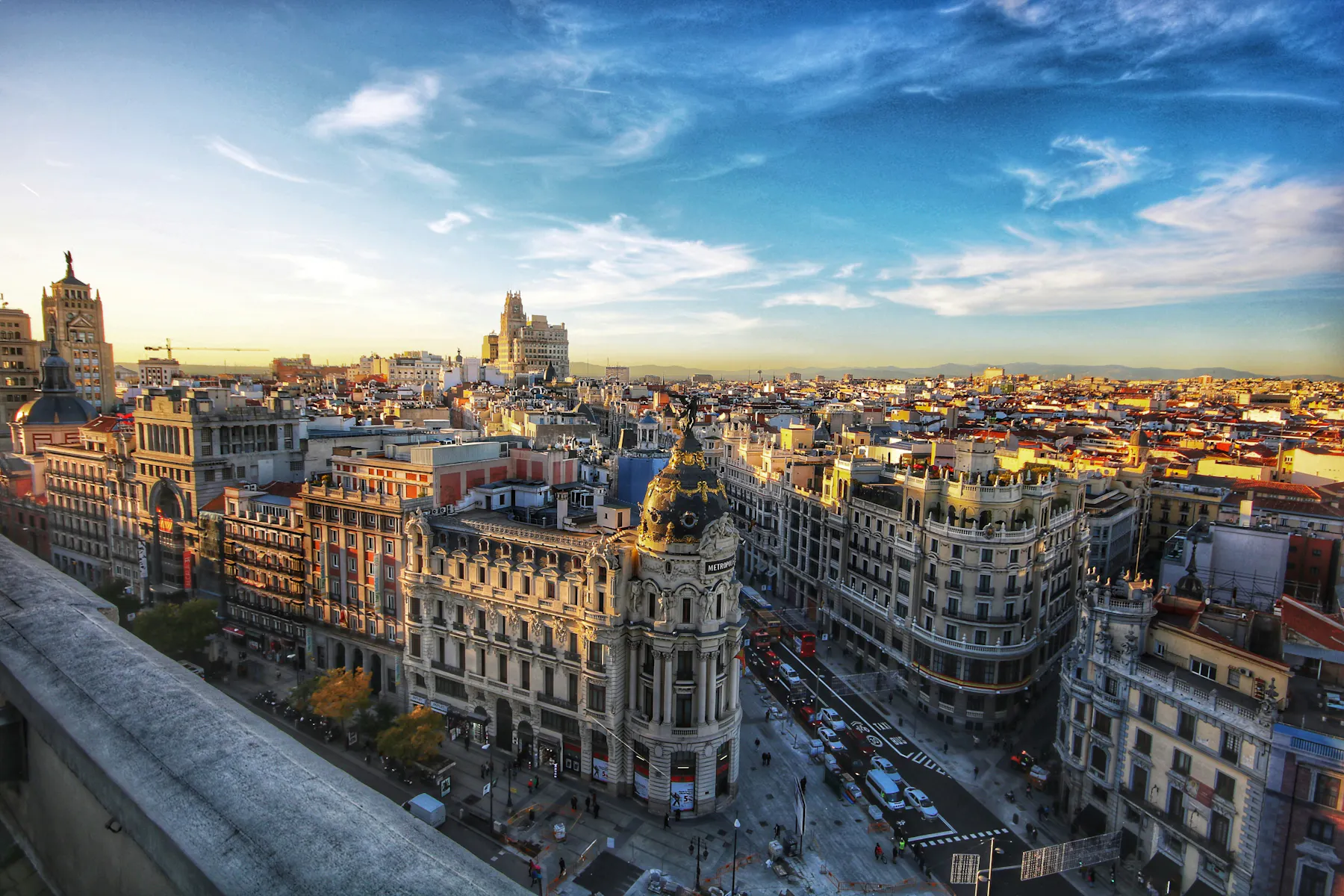
Living in Madrid Salamanca
Laid out in the nineteenth century on a strict grid east of the Retiro, Salamanca is Madrid's most expensive district and its most polished: wide sidewalks, tall stone buildings and the luxury retail of Calle Serrano and Calle Ortega y Gasset.
The Salamanca Neighborhood
The default choice for corporate assignments and for anyone who values order and quiet. It is safe, immaculately maintained, extremely well connected, and bordered by the Retiro on one side. The Golden Mile shopping district and a dense concentration of good restaurants sit within it.
The trade-off is atmosphere. Salamanca is formal and residential, and its evening life is restaurants rather than bars. If you want Madrid's noise and improvisation, live somewhere else and visit.
What Drives Rent Prices in Salamanca
Exterior versus interior is the main driver. Salamanca's blocks are built around courtyards, and a furnished apartment facing the street with balconies costs considerably more than one facing inward on the same floor of the same building. Elevator, doorman, terrace and air conditioning are the other differentiators.
Living in Madrid Chamberí
Directly north of the center, Chamberí is what many Madrileños name when asked where they would live given the choice. It is central without being touristy, elegant without being showy, and its restaurant scene has become one of the strongest in the city.
The Chamberí Neighborhood
The best all-round balance in Madrid. You are ten minutes from Gran Vía on the metro, in a district of nineteenth-century buildings, small squares and neighborhood shops that still function as neighborhood shops. Calle Ponzano alone has enough bars to occupy a year.
It suits professionals and couples who want to be central and still sleep at night. Families do well here too, with several good schools and the Canal de Isabel II sports facilities nearby.
What Drives Rent Prices in Chamberí
Proximity to Almagro or Chamberí metro and the state of renovation. The district's housing stock is old and unevenly modernized, so two apartments of the same size on the same street can be very different propositions. Elevators are common but not universal.
Living in Madrid Centro: Malasaña, Chueca and La Latina
The old city inside the ring of Gran Vía, Calle Alcalá and the Palacio Real. Malasaña is the alternative and vintage quarter, Chueca the heart of Madrid's LGBTQ+ life and one of its best shopping districts, La Latina the Sunday-afternoon vermouth and tapas neighborhood.
The Centro Neighborhood
The right choice if you came to Madrid for Madrid. Everything is walkable, the street life is constant, and the density of bars, galleries, independent shops and restaurants is unmatched anywhere in the city.
Two honest caveats. It is loud, genuinely so, on Thursday through Saturday nights in Malasaña and around La Latina. And the apartments are small: Centro's buildings are old and heavily subdivided, so square meters cost more here than the headline rent suggests.
What Drives Rent Prices in Madrid Centro
Noise, floor and light drive the price more than the address does. An interior apartment on a quiet courtyard commands a premium from long-stay tenants for exactly the reason it puts off short-stay ones. Top-floor apartments with terraces are the most sought-after in the district.
Living in Madrid Retiro
East of the center and wrapped around the Parque del Retiro, this is Madrid's green district: quiet residential streets, the Paseo del Arte museums along its western edge, and 118 hectares of park on the doorstep.
The Retiro Neighborhood
The best fit for anyone prioritizing space, calm and outdoors. The park is the city's living room, with rowing boats, the Palacio de Cristal, weekend drummers and enough running paths to keep anyone occupied. The Ibiza and Pacífico areas within Retiro are residential and well-priced by central Madrid standards.
Atocha station sits at its southern edge, which puts you on a high-speed train to Barcelona, Seville or Valencia without crossing the city first.
What Drives Rent Prices in Retiro
Distance from the park, and which side of the district you are on. Streets directly facing the Retiro carry a clear premium. Move a few blocks east toward Ibiza or south toward Pacífico and an apartment of the same specification costs noticeably less.
Also worth a look: Tetuán and the AZCA business district around Nuevos Ministerios, which suits anyone working in the northern office corridor, and Las Tablas further north, purpose-built around corporate campuses. Both are better value than the four districts above and less interesting to live in.
Living in Madrid
Madrid is straightforward to settle into once the paperwork is done, and the paperwork has a strict order. Here is what to tackle first.
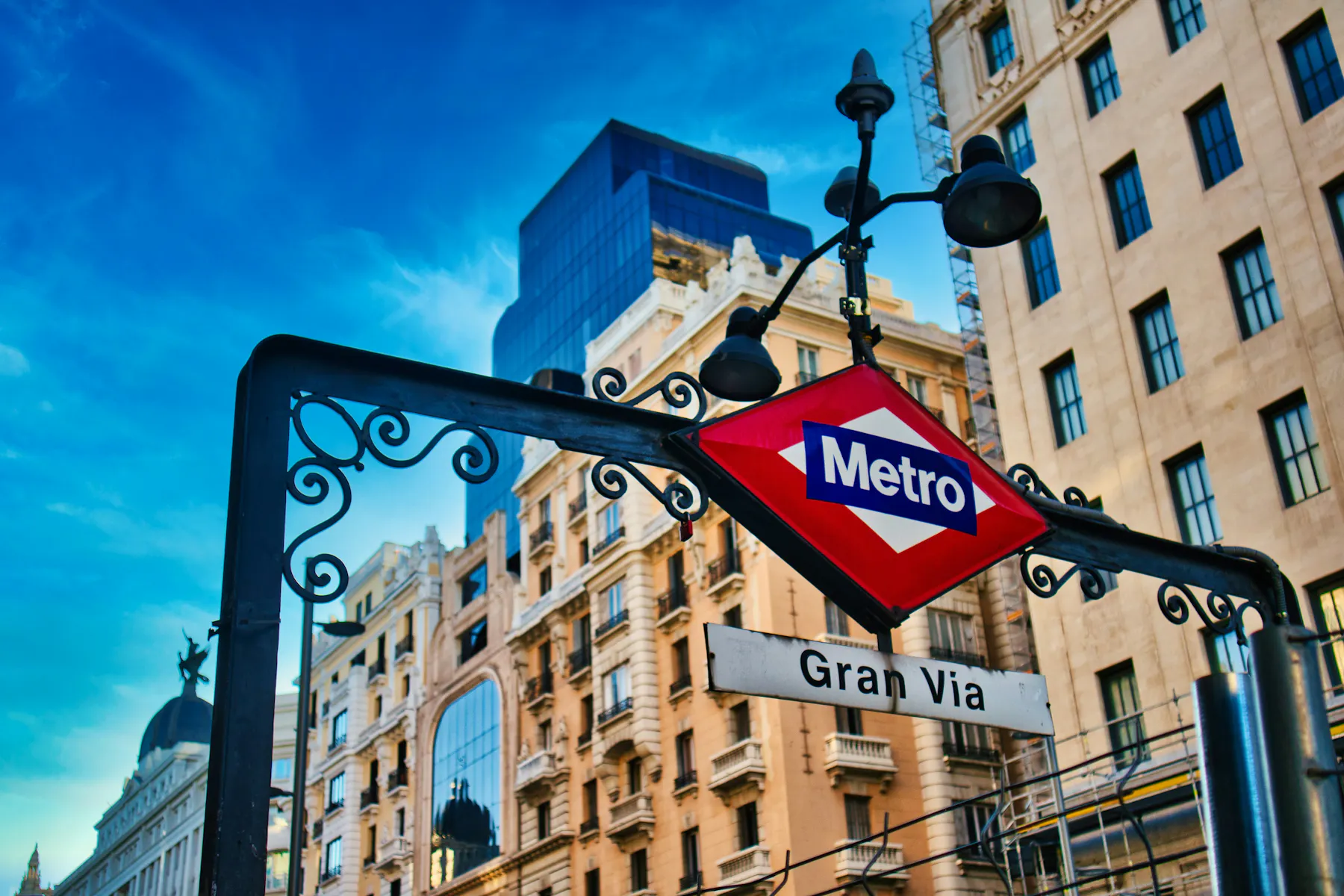
Transport in Madrid
Public Transport
Metro de Madrid runs twelve numbered lines plus the Ópera to Príncipe Pío branch, alongside three light rail lines, and it is fast, cheap and extensive. EMT operates the buses, including night services known as búhos.
A single metro ticket costs €1.50 for up to five stations, then adds €0.10 per station, reaching €2.00 at ten stations or more. A single EMT bus ticket is €1.50 flat. A ten-trip Metrobús ticket covering metro Zone A, EMT buses and light rail line 1 costs €7.30.
The monthly pass is where Madrid becomes remarkable value. The Comunidad de Madrid has extended its transport subsidies through to 31 December 2026, so the 30-day Zone A pass costs €32.70 for anyone aged 26 to 64, a 40 percent discount on the standard €54.60. The Abono Joven, for anyone aged 15 to 25, costs €10 per month and covers the entire region including Cercanías trains out to the mountains. Travel is free for under-14s and for over-65s.
Worth diarizing: these are subsidized rates with a stated end date of 31 December 2026, not permanent prices.
You need a Tarjeta Transporte Público card to load a monthly pass. Apply online and collect, or book an appointment at an authorized office.
One catch to know: journeys to and from the airport metro stations carry a €3.00 supplement on top of your ticket, and it is not covered by the Metrobús ten-trip card.
Taxis
Madrid taxis are metered and regulated by the city, on two tariffs. Tariff 1 applies on weekdays from 07:00 to 21:00: €2.55 flag drop and €1.40 per kilometer. Tariff 2 covers everything else, which is more than most guides suggest. It runs every night from 21:00 to 07:00 and all day on weekends and on public holidays: €3.20 flag drop and €1.60 per kilometer.
The useful one to remember: journeys between Barajas airport and anywhere inside the M-30 ring road are a fixed €33, in both directions, regardless of traffic. That covers essentially the whole of central Madrid and removes any argument about the route.
Uber, Bolt, Cabify and FreeNow all operate in Madrid.
Driving and the Low Emission Zone
The whole municipality is a low emission zone under the Madrid 360 scheme, with two tighter special zones at Distrito Centro and Plaza Elíptica. Access depends on your vehicle's DGT environmental sticker.
The rules are being phased in more gently than the headlines suggest. The city extended the warning period for unstickered vehicles to 31 December 2026, so those drivers currently receive letters rather than fines, and the exception allowing B-sticker vehicles under 3,500 kg into Distrito Centro was extended for another year. Check your vehicle's classification with the DGT before driving in, and check the current phase rather than assuming enforcement has begun.
Very few people living in the four districts above keep a car. The metro is better and parking is both scarce and expensive.
Sightseeing in Madrid
The Paseo del Arte
Three world-class museums within a ten-minute walk. The Prado for Velázquez, Goya and Bosch. The Reina Sofía for Picasso's Guernica. The Thyssen-Bornemisza for everything the other two do not cover. All three offer free entry windows in the evening, which are busy for good reason.
Parque del Retiro
Madrid's central park, 118 hectares of former royal gardens laid out in the seventeenth century and declared a public park in 1868. The Palacio de Cristal inside it hosts contemporary art exhibitions and is worth seeing empty as much as full.
Palacio Real
The largest royal palace in Western Europe, 135,000 square meters and 3,418 rooms. It is the monarch's official residence and hosts state ceremonies, which is why parts periodically close, though the royal family actually lives at Zarzuela outside the city.
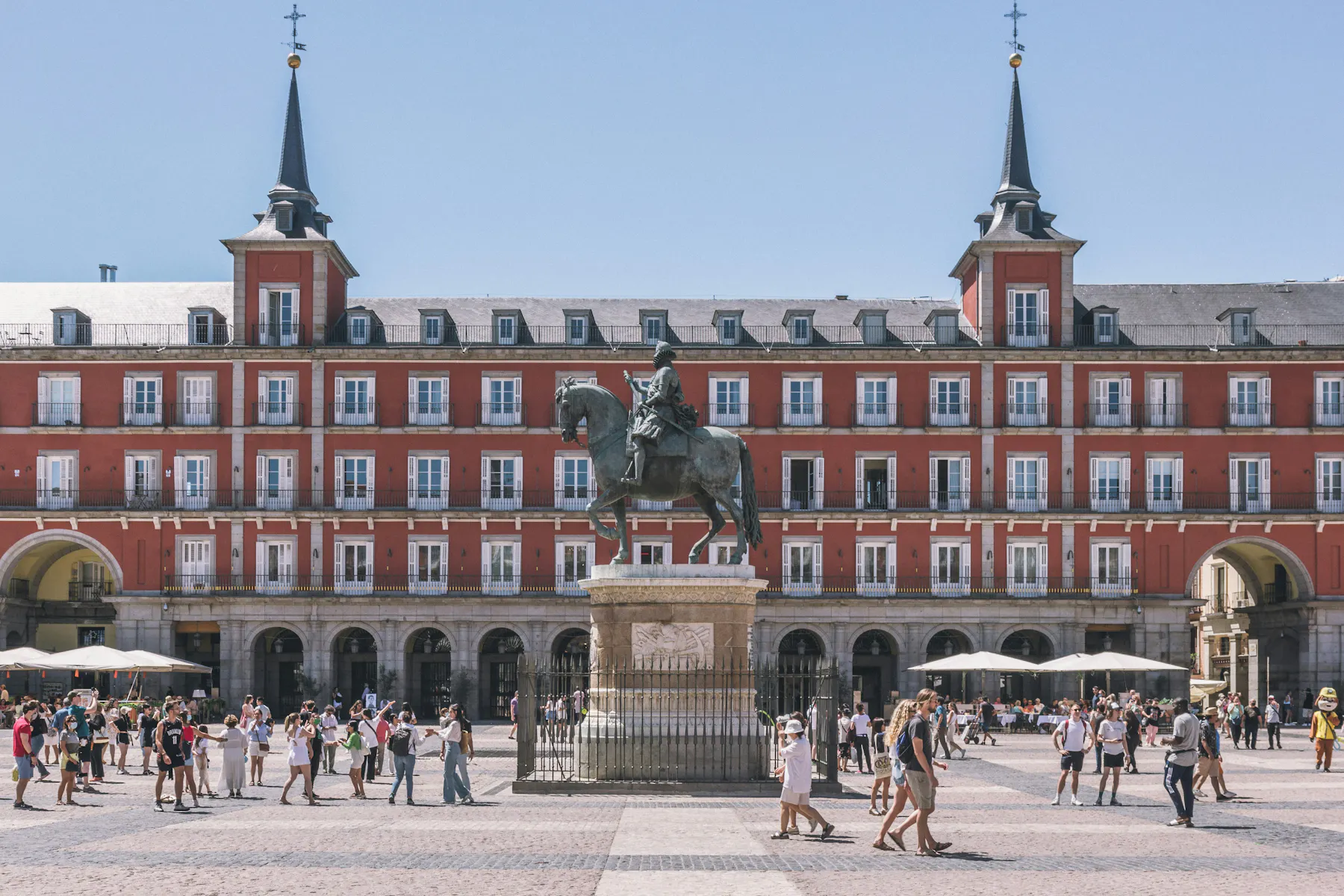
Plaza Mayor and Mercado de San Miguel
The seventeenth-century arcaded square at the heart of old Madrid, and the restored iron-and-glass market beside it. The market is touristy and the food is still good.
Templo de Debod
A genuine Egyptian temple whose oldest part dates to the second century BC, gifted to Spain in 1968 for its role in the UNESCO Nubia rescue campaign and reassembled here in 1972. It faces due west, which makes it Madrid's best sunset spot.
Gran Vía
Madrid's early twentieth-century grand avenue, built for cinemas, theaters and department stores, and still doing all three. The rooftop bars along it are the easiest way to see the skyline.
Matadero Madrid
A former slaughterhouse in Arganzuela converted into one of Europe's largest cultural centers, with theater, film, design and exhibition spaces across a dozen brick buildings.
Santiago Bernabéu
Real Madrid's stadium, reopened after a full reconstruction that wrapped it in a metal shell and installed a pitch that splits into trays and lowers 25 meters into an underground greenhouse. The engineering is remarkable and has been troublesome in practice, with repeated turf replacements since it opened.
Tours run most of the year but not quite all of it. The stadium closes on 25 December and 1 January, and on match days the tour finishes several hours before kick-off with a reduced route. Check the calendar before you travel across the city.
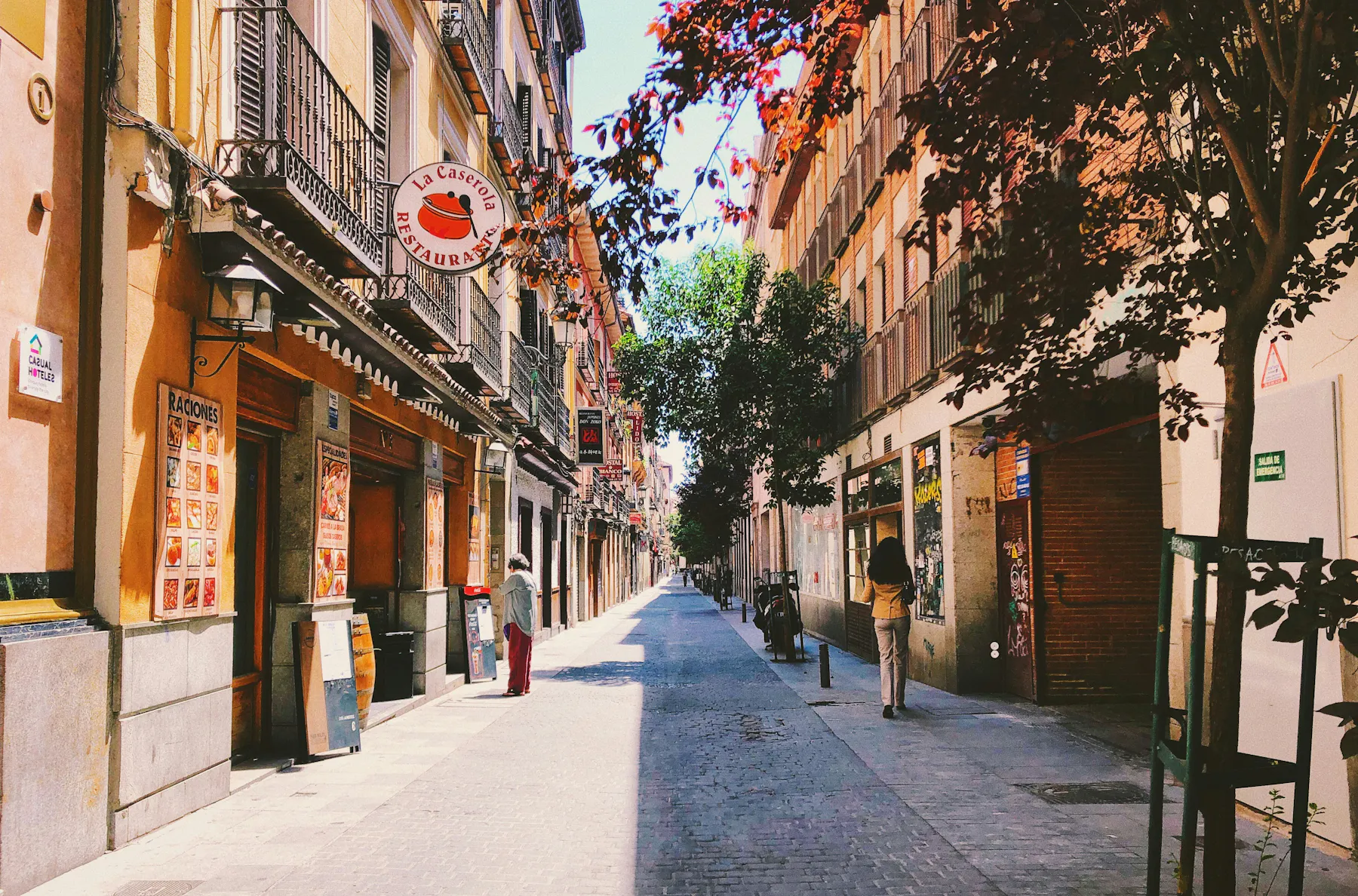
Useful Services in Madrid
NIE and Empadronamiento
Two documents unlock everything else. The NIE is your foreigner identification number, required for contracts, banking and employment. The empadronamiento is your registration on the municipal roll at your local Junta Municipal de Distrito, and you generally need a rental contract or equivalent proof of address to obtain it.
The order matters and appointments can be scarce, particularly for NIE. Book as early as you can, and check the current requirements for your nationality before you travel.
Bike Sharing
BiciMAD is the municipal scheme, run by EMT, with an all-electric fleet that handles Madrid's gentle hills easily. The network expanded substantially beyond the central districts in recent years.
Gyms
Basic-Fit, VivaGym and Metropolitan all operate across Madrid at different price points. Spanish gyms commonly charge a joining fee and require notice to cancel, so read the terms.
Food Delivery
Glovo, Uber Eats and Just Eat all operate in Madrid. Glovo also delivers groceries, pharmacy items and almost anything else.
Frequently Asked Questions About Renting in Madrid
Which area of Madrid is best for professionals?
Salamanca for corporate assignments and a formal, quiet base. Chamberí for the best all-round balance of central location and residential calm.
Which area of Madrid is best for nightlife and city life?
Centro, specifically Malasaña, Chueca and La Latina. Expect small apartments and real noise on weekends in exchange for having everything on your doorstep.
Which area of Madrid is best for families or outdoor space?
Retiro, for the park, the quieter streets and better space per euro than the districts to its west.
Do I need a NIE to rent an apartment in Madrid?
You will need one for most Spanish contracts, including banking, utilities and employment. Requirements for a rental contract vary by landlord, so confirm what is needed before you commit.
Do I need a Spanish guarantor to rent in Madrid?
For a standard Spanish lease, landlords commonly ask for a work contract, payslips and sometimes an aval or bank guarantee. Furnished mid-term rentals on Wunderflats do not require this, which is why they work for people arriving without a Spanish financial history.
How much is public transport in Madrid?
A 30-day Zone A pass costs €32.70 for ages 26 to 64, a 40 percent discount on the standard €54.60, and €10 per month for ages 15 to 25 covering the whole region. These are subsidized rates that the Comunidad de Madrid has confirmed through 31 December 2026. Single metro tickets run €1.50 to €2.00 depending on distance.