Furnished Apartments Lisbon | Rent a Flat in Lisbon
- 21 Search results

Tips for Finding an Apartment in Lisbon
Lisbon changed faster than almost any European capital over the last decade. Remote workers, a large startup scene anchored by Web Summit, and a wave of international arrivals reshaped the rental market, and rents rose faster than local wages for most of that period. The result is a city that is still one of Western Europe's more affordable capitals in absolute terms, and one of its most competitive in practice.
Lisbon's housing stock tells the city's history: buildings from different centuries sit side by side, and no two blocks are quite the same. Floor level, elevator access and orientation vary significantly even within a single street, which is part of what gives the city its character.
Lisbon is built on hills above the Tagus. Distances look short on a map and feel longer on foot. Here is our guide to the neighborhoods where we see the most demand for furnished apartments in Lisbon.
Living in Lisbon Avenidas Novas and Saldanha
The grid of wide boulevards running north from Marquês de Pombal. Avenidas Novas is Lisbon's business district: offices, banks, the Gulbenkian Foundation and the El Corte Inglés department store, laid out in early twentieth-century blocks rather than medieval lanes.
The Avenidas Novas and Saldanha Neighborhood
The most practical base in Lisbon for anyone here to work. Saldanha is a major interchange where the red and yellow metro lines meet, which puts the airport about fifteen minutes away and most of the city within half an hour. The buildings are newer than the center, so elevators, decent insulation and proper kitchens are far more common.
It is not the Lisbon of postcards. What you get instead is a flat, walkable, well-served district where daily life is easy, and the historic center is fifteen minutes away when you want it.
What Drives Rent Prices in Avenidas Novas and Saldanha
What you pay here is driven by proximity to Saldanha or Picoas metro, the age of the building, and whether there is an elevator. A renovated apartment in a 1950s block with an elevator and parking sits at the top of the local range. An unrenovated upper floor without an elevator sits well below it, even on the same street.
Living in Lisbon Baixa, Chiado and Alfama
The historic core. Baixa is the grid rebuilt after the 1755 earthquake, Chiado the elegant shopping and theater quarter above it, and Alfama the tangle of lanes that survived the earthquake intact and still feels like a village inside the city.
The Baixa, Chiado and Alfama Neighborhood
This is where people want to live before they arrive, and where the trade-offs are sharpest. You are inside the city's best walking, eating and viewing, with miradouros and the river a few minutes away in any direction.
Be clear-eyed about the practicalities. Tourist footfall is constant, tram 28 rattles past bedroom windows, buildings are centuries old and elevators are rare. Apartments in Alfama in particular mean stairs in every direction. Wonderful for six months. Harder if you are carrying shopping up four floors every day for two years.
What Drives Rent Prices in Baixa, Chiado and Alfama
Three things move the price of a furnished apartment here: an elevator, a view and quiet, in that order. A river or castle view commands a real premium. So does any apartment above the ground floor with a working elevator, which is genuinely scarce in this part of the city.
Living in Lisbon Avenida da Liberdade and Marquês de Pombal
The tree-lined boulevard running from Restauradores up to the roundabout at Marquês de Pombal, modeled on the Champs-Élysées and lined with luxury retail, hotels and corporate headquarters.
The Avenida da Liberdade and Marquês de Pombal Neighborhood
Lisbon's most prestigious address, and the natural fit for corporate assignments and anyone whose employer is covering the housing budget. You are on the blue and yellow metro lines, walking distance from both the business district and the historic center, and next to Parque Eduardo VII for running.
The area is dense, formal and a little quiet in the evenings compared with Bairro Alto or Cais do Sodré. That suits some people exactly.
What Drives Rent Prices in Avenida da Liberdade and Marquês de Pombal
Address and building quality carry more weight here than anywhere else in Lisbon. Frontage onto the Avenida itself, secure entry, air conditioning and parking are the features that separate the most expensive furnished apartments from the rest.
Living in Lisbon Alvalade and Areeiro
North-east of the center, Alvalade is a planned mid-century neighborhood of low-rise blocks, garden courtyards and local shops. Areeiro sits between it and the center, built around a distinctive circular plaza.
The Alvalade and Areeiro Neighborhood
The best fit on this list for a stay of a year or more. Alvalade was designed as a residential district and still works as one: bakeries, markets, sports clubs, the Alvalade stadium, and a calm that the center cannot offer. The green metro line runs straight down to Baixa in around fifteen minutes.
It is also close to several university faculties and the Cidade Universitária, which makes it a reasonable base for academic stays.
What Drives Rent Prices in Alvalade and Areeiro
Distance from the metro, floor level and whether the apartment has been renovated. Alvalade's mid-century blocks vary enormously inside: identical exteriors can hide an original 1950s interior or a full modern refit, and the price follows the interior rather than the address.
Also worth a look: Campo de Ourique, a genuinely residential village-like district west of the center with an excellent covered market, and Parque das Nações, the riverside quarter built for Expo 98 that now houses much of Lisbon's tech sector. Supply on Wunderflats in both is thinner than in the four areas above.
Living in Lisbon
Lisbon is welcoming and slow to bureaucratize, in roughly equal measure. Get the paperwork moving early and the rest of the city is a pleasure. Here is the order to do things in.
Transport in Lisbon
Public Transport
Metro, buses, trams and the funiculars are covered by the navegante card system. The metro has four lines and is quick and clean. Buses and trams fill the gaps, and the hills mean you will use them more than you expect.
A single Carris/Metro ticket costs €1.90 and is valid for one hour. A 24-hour Carris/Metro ticket is €7.25, and versions that add the ferry to Cacilhas (€10.35) or the CP trains (€11.40) are available.
If you are staying a month or more, buy a navegante pass, and choose the right one. The municipal pass costs €30 per month but is valid inside a single municipality only. A navegante Lisboa covers the city of Lisbon and nothing beyond it, so if you live in Amadora, Odivelas or anywhere else in the metropolitan area and commute in, it will not cover your journey. For that you need the metropolitan pass at €40 per month, which covers the whole Lisbon region including Sintra and Cascais. Both prices have been held for several years.
Residents and students registered in Portugal aged 23 and under can travel free on public transport through the Sub23+TP scheme. To benefit, you need to apply for and activate the youth free pass profile on your navegante card — it is not automatic. The exemption does not apply to tourists or short-term visitors.
Over-65s who are residents in Portugal pay €20 per month for the navegante metropolitano pass, a 50% discount on the standard €40 rate. This also requires Portuguese residency and does not apply to visiting retirees.
You can also load "zapping" credit onto a navegante card, which charges €1.72 per metro trip. That works out cheaper than single tickets if you are not yet ready to commit to a monthly pass.
Taxis and Ride-Hailing
Lisbon taxis run on a metered national tariff, with a starting fare of around €3.25 plus a distance and time charge. Fares are the same across the country.
A regulation reducing the flag-fall fee from €3.25 to €2.00 and abolishing the luggage surcharge was published in June 2026, then delayed by 60 days at the industry's request. It should now be taking effect. As ever, read the tariff card on the vehicle.
Bolt and Uber both operate widely in Lisbon and are often cheaper than a metered taxi for cross-city journeys.
Getting a NIF
Not transport, but it belongs at the top of your list. The número de identificação fiscal is Portugal's tax number and you will need it to open a bank account, sign a phone contract, set up utilities and in most cases sign a lease. Almost nothing else proceeds without it.
One thing worth knowing, because a lot of paid services imply otherwise: you do not need a fiscal representative simply to obtain a NIF as a non-resident. The Autoridade Tributária requires one only once you have an actual tax relationship with Portugal, such as owning property or a vehicle, signing a Portuguese employment contract, or registering as self-employed. Even then, you can usually meet the obligation by opting into electronic notifications through the Portal das Finanças instead of paying an agency. Check your own situation against the tax authority's guidance before you buy a representation service.
AIMA
If you are arriving from outside the EU and staying longer than 90 days, AIMA (Agência para a Integração, Migrações e Asilo) is one of the first things to set in motion. AIMA replaced SEF in October 2023 and is now Portugal's authority for residence permits, visa extensions and legal residency registration for non-EU nationals. A stay of 6 months to 1 year exceeds the Schengen 90-day limit, so a valid visa or residence permit is required before you arrive. Appointment wait times have been long since the agency launched, often running several months, so book as early as possible. Without a valid residency document, other steps like opening a bank account or signing long-term contracts become significantly harder. EU citizens register residency at their local Junta de Freguesia rather than through AIMA, but it is worth confirming which process applies to your situation before you travel.
Sightseeing in Lisbon
Belém
The riverside district where Portugal's maritime expeditions departed. The Torre de Belém and the Mosteiro dos Jerónimos are both UNESCO sites, and the Pastéis de Belém bakery has been making the original custard tarts since 1837. Go early.
Castelo de São Jorge and Alfama
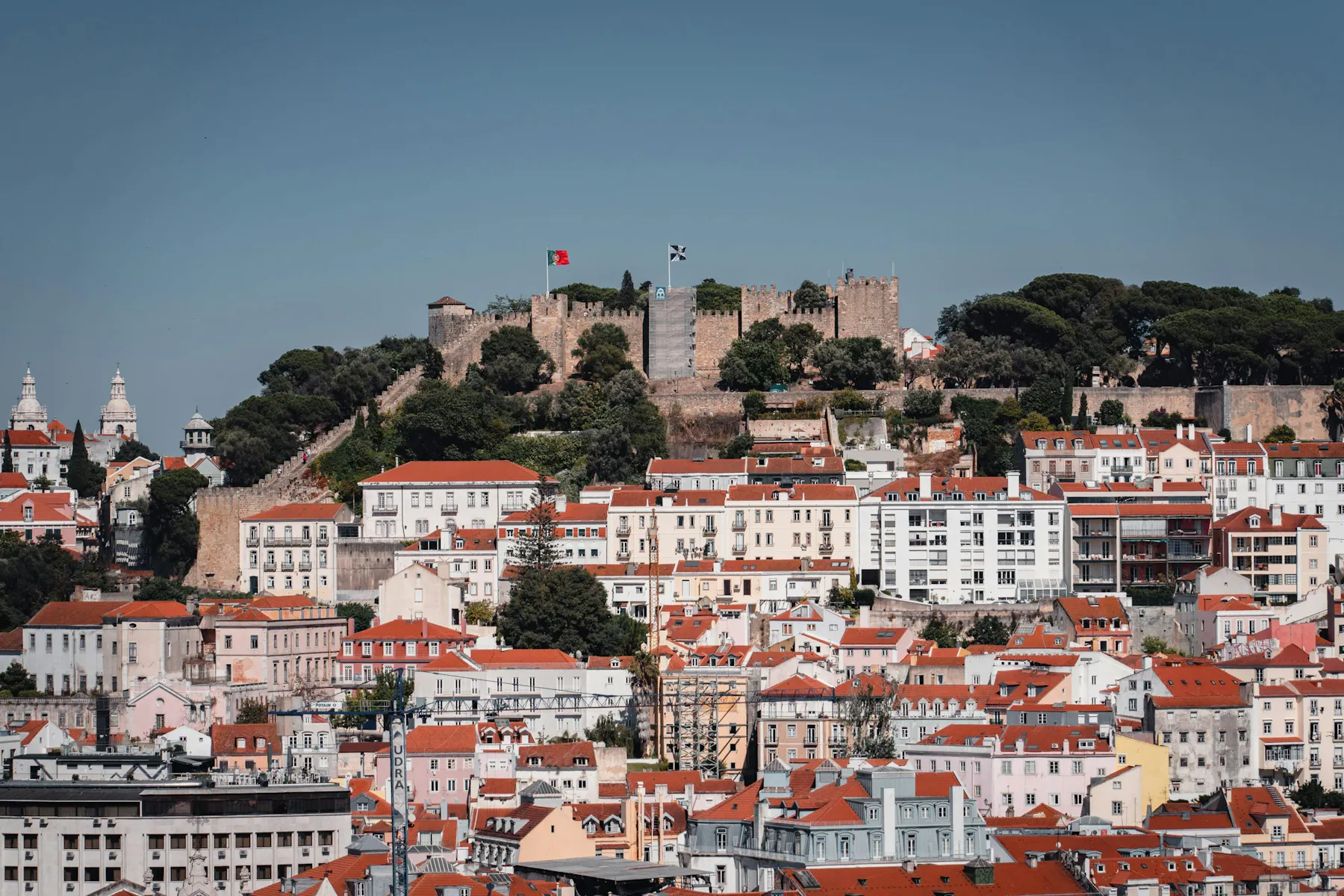
The Moorish castle crowns the city's highest hill, with views across the whole of central Lisbon and the Tagus. Below it, Alfama's lanes are the best wandering in the city, and the place to hear fado in the evening.
Tram 28
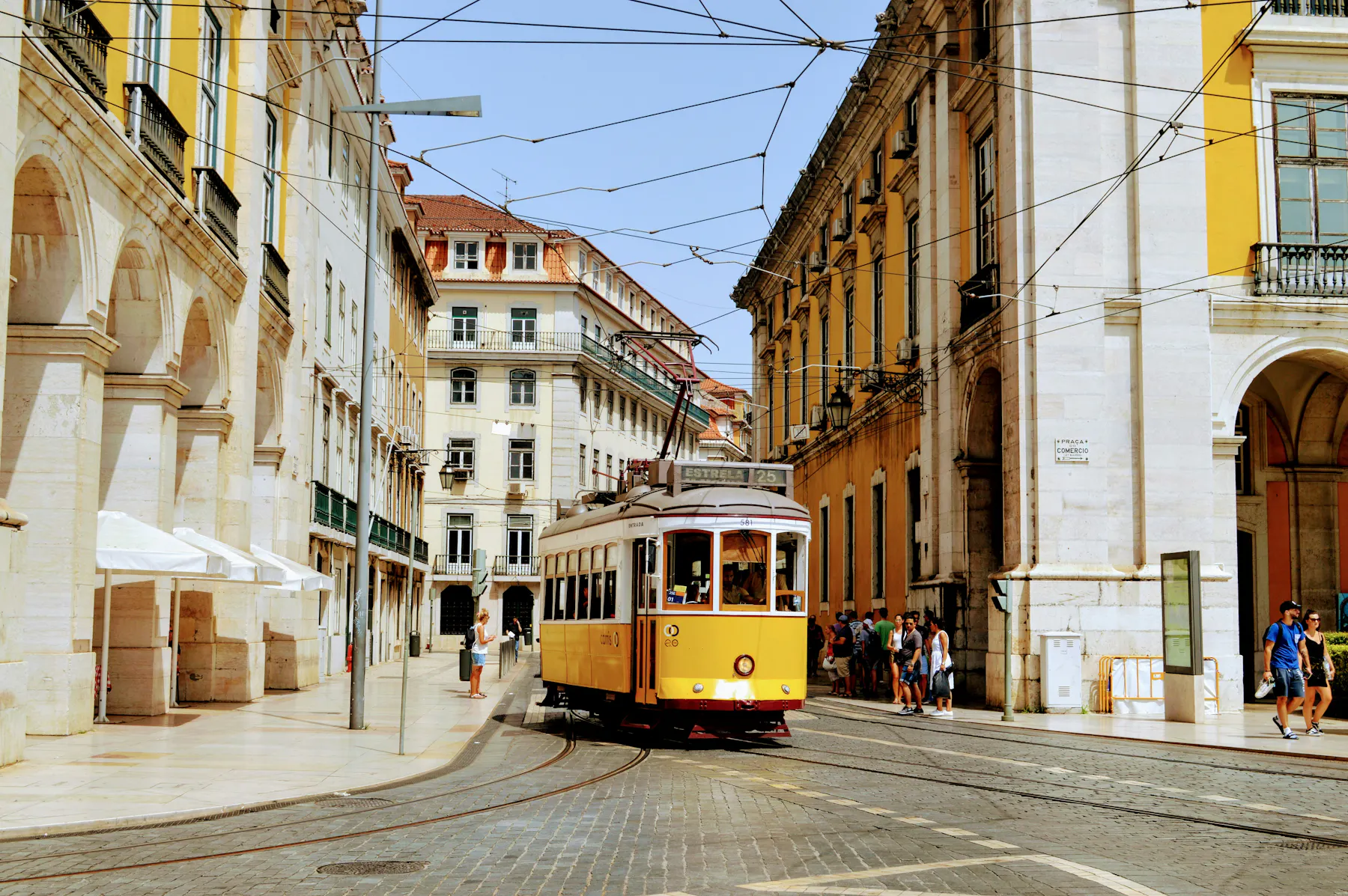
The yellow tram that grinds up through Graça, Alfama, Baixa and Estrela is a genuine working tram line and a sightseeing route at once. It is also heavily pickpocketed. Ride it early in the morning, keep your bag in front of you.
The Miradouros
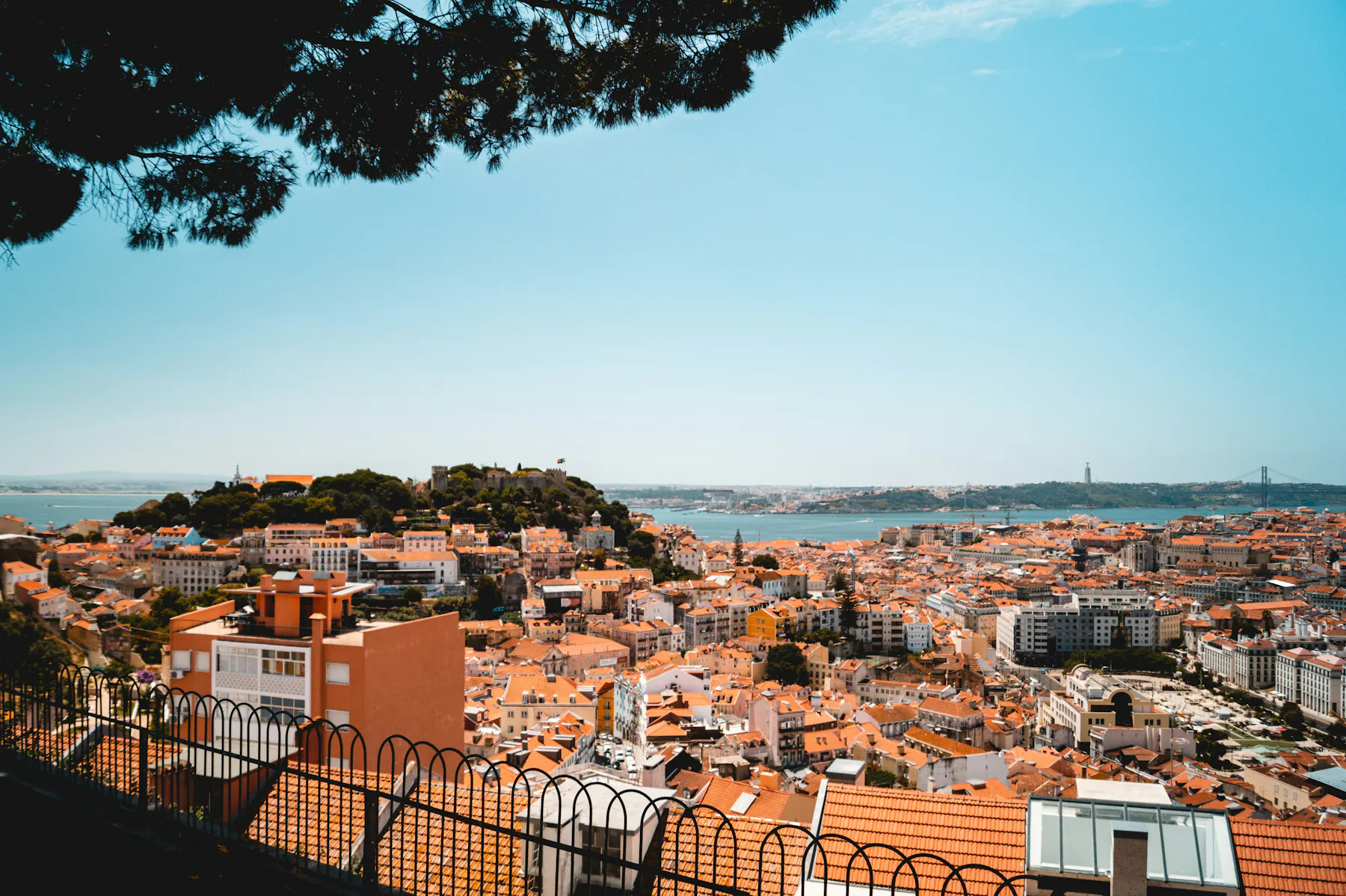
Lisbon's viewpoints are a civic institution. Senhora do Monte for the widest view, Santa Catarina for sunset over the river, São Pedro de Alcântara for the castle opposite. Most have a kiosk selling drinks.
Museu Calouste Gulbenkian
One of Europe's great private collections, from Egyptian antiquities to Lalique glass, set in a modernist building with its own gardens. The adjoining modern art collection is equally strong.
LX Factory and Time Out Market
Two versions of reinvented industrial Lisbon. LX Factory is a printing complex under the 25 de Abril bridge turned into studios, bookshops and restaurants. Time Out Market at Cais do Sodré gathers many of the city's best kitchens under one roof.
MAAT and the Riverside
The Museum of Art, Architecture and Technology sits on the water at Belém under a wave-shaped roof you can walk across. The riverside path from here back toward the center is one of Lisbon's best walks or runs.
Parque das Nações and the Oceanário
Built for Expo 98 on former industrial land, and home to one of the world's largest aquariums. Worth the metro ride even if you are not staying in the area.
Useful Services in Lisbon
Bike Sharing
GIRA is the city's scheme, run by the municipal mobility company, and its fleet is largely electric, which matters a great deal on Lisbon's hills. Register through the app.
Low Emission Zone
Central Lisbon has a Zona de Emissões Reduzidas with two tiers. Zone 1, the Avenida da Liberdade and Baixa axis, requires Euro 3 or better. Zone 2, covering the wider center, requires Euro 2 or better. Both apply on weekdays from 07:00 to 21:00 only, so weekends, public holidays and evenings are unrestricted. Fully electric vehicles are exempt.
The rules themselves have been stable for years. What changed recently is enforcement: the city is installing automatic number plate recognition cameras, so breaches that previously went unnoticed are now likely to be fined. If you are bringing or renting a car, check its emissions class before you drive into the center.
Gyms
Fitness Hut and Solinca both have several Lisbon locations with monthly options. Check the minimum term before signing, as Portuguese gym contracts commonly run for twelve months.
Food Delivery
Uber Eats, Glovo and Bolt Food all operate across Lisbon, and Glovo and Bolt Food both deliver groceries as well as restaurant orders.
Frequently Asked Questions About Renting in Lisbon
Which area of Lisbon is best for professionals?
Avenidas Novas and Saldanha, for the business district, the metro interchange and newer buildings with elevators. Avenida da Liberdade suits corporate assignments where the address matters.
Which area of Lisbon is best for a longer stay?
Alvalade, for its residential character, everyday shops and a direct metro line to the center. Campo de Ourique is a good second option.
Do I need a NIF to rent an apartment in Lisbon?
You will need one for most Portuguese contracts, including utilities, banking and mobile plans, and usually for a lease. Contrary to what many paid services suggest, a fiscal representative is not required simply to obtain a NIF as a non-resident. It becomes necessary only once you have a tax relationship with Portugal, and even then electronic notifications through the Portal das Finanças are often an alternative.
Do I need a Portuguese guarantor to rent in Lisbon?
For a standard long-term Portuguese lease, often yes, or several months of rent in advance. Furnished mid-term rentals on Wunderflats do not require a fiador, which is why they suit people who have not yet built a local financial history.
Is Lisbon cheaper than other Western European capitals?
In absolute terms it remains cheaper than London, Paris, Amsterdam or Dublin. Relative to local salaries it is one of the more strained markets in Europe, which is why competition for good apartments is intense.